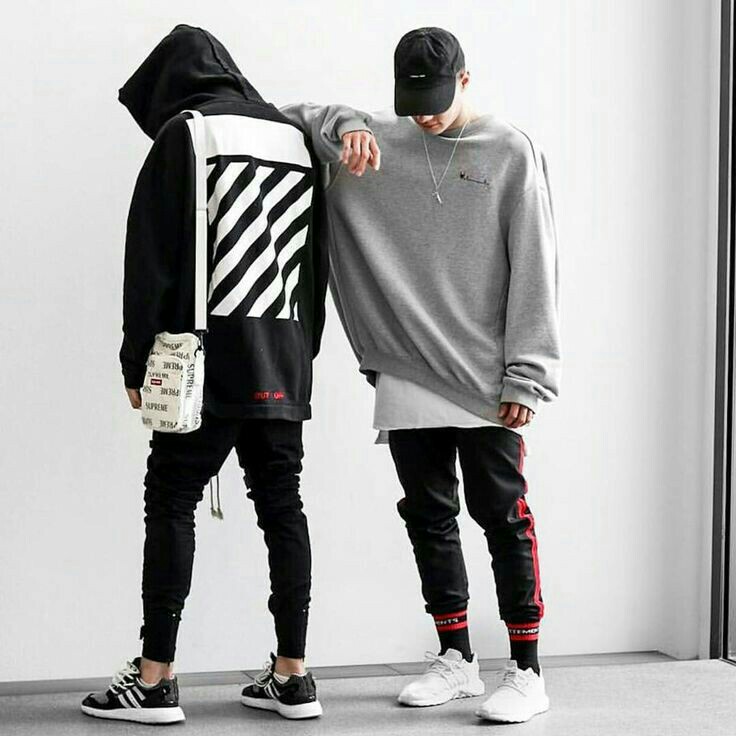
In recent years we’ve seen a growth in Australian and global street wear fashion market. Young adults are keener and more willing to spend a larger sum for designer clothing by luxury brands. With behavioural economics, let’s explore why.

Luxury spending comes under the topic of conspicuous spending, where consumers purchase higher quality or higher quantity of products than necessary. It defines how people might choose a $200 t-shirt than a $20 one.
There can be many factors behind why people purchase luxury goods, but the main reason would be for status, where by wearing more expensive clothing sends a message to those around them about how rich they are.
A major driving force for street wear is herd behaviour. What is known as ‘hype’, describes how excited the mass of consumers are for a certain product. This type of luxury good comes under the name of Veblen goods, where unlike conventional goods, the price increases hand in hand with the demand. In our case, clothing that is really ‘hyped’ means that the demand is really high, which in turn drives the product prices up. This explains how despite two t-shirts being of similar or even identical quality can differ drastically in price.
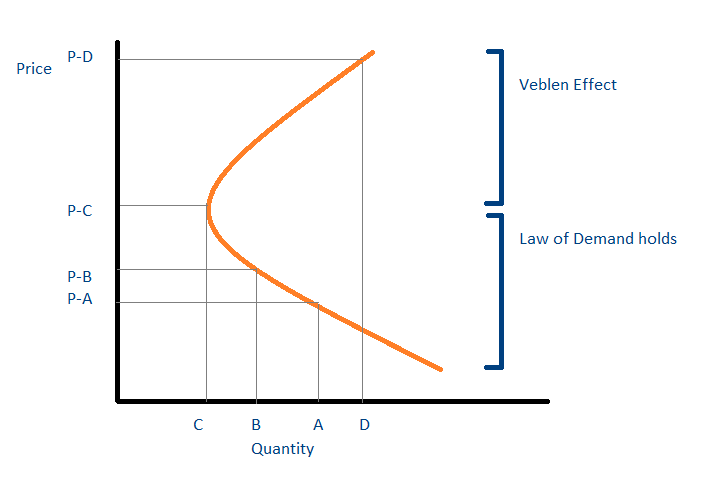
https://cdn.corporatefinanceinstitute.com/assets/veblen-goods1.png
The effect of this towards luxury brands is that consumer reputation becomes excessively important, as consumer demand drives prices up exponentially, so marketing and advertising can determine the success of a luxury product. It also means that young adults are becoming pressured harder to submit to herd behaviour, the purpose of clothing has become less and less of comfort and value, but more of social status and popularity.
In my opinion, the market has bloated out of control, street wear prices have fluctuated to the point where costs have become unreasonable with certain products. In addition, the concept of ‘hype’ has developed the ‘sheep syndrome’, where our young adults have steered away from individuality to conform to societal norms. Though, with the current influence of social media, I believe the ‘hype beast’ phenomena is here to stay for a while.
 MHS Economics 2019
Do hype clothing boost the economy? Or would economies be better off with everyone purchasing cheap clothes.
LikeLike
Hey jeff, hypebeast is not a culture powered by social media, its a way of life. I wear supreme because I AM supreme. A very interesting read to see how herd behaviour correlates to conspicuous consumption.
LikeLike